
How to Tell if an Online Casino is Real or a Scam

Author: Adam Collins
Online casino scams have become one of the fastest-growing online fraud categories this year. They look polished. They sound convincing. They promise bonuses that feel too good to ignore. But behind the colorful banners and glittering slot animations lies a simple goal: separate you from your money.
At ScamAdviser, we have noticed an influx of online casino and betting scams in the recent past, with reviews on suspicious sites such as Slotjp555.online, Homebet88win.online, and many others. These platforms often share the same red flags — hyperlinks that lead to a completely different domain, mismatched branding, and what appears to be a broader “mirror site” network commonly seen in scam sites offering slot-style gaming pages.
This guide walks you through how scam casinos work, how to verify a real one, what myths scammers use to lure you in, and what you can realistically do if you’ve already lost money.
If You Only Remember Three Things
- Fake casinos hide behind unlicensed operations, unrealistic bonuses, and rigged systems.
- There is no trick to winning slots, no “$20 method,” and no jackpot “trigger.”
- Recovery is possible, but chargebacks have tight limits, and crypto can’t be reversed.
How to Verify an Online Casino?
Before you even think about creating an account or clicking a banner ad, ask yourself: How do I verify an online casino? What does a real casino look like? And how do I spot a fake casino instantly?
Most scam casinos break the illusion the moment you check their legitimacy. For starters, look for a real license. The safest online casinos operate under strict regulators like the UKGC or MGA. If a website claims to be licensed but doesn’t link to a verifiable regulator page, that’s a red flag. Many scam casinos even paste a fake logo at the bottom of the page hoping you won’t check.
Next, think about independent audits. A real casino will proudly show a certificate from eCOGRA or another recognized testing body. Scam casinos copy the logos but never link to an actual certificate. If the certificate isn’t verifiable, assume it’s fake.
Then there’s the website itself. Does it feel professionally built, or does it look like it was assembled overnight? Scam casinos often have unprofessional website design, low-quality graphics, missing pages, or awkward English. Many even push fake casino apps outside official app stores—usually with surprisingly low download numbers or reviews that look copy-pasted.
And of course, the biggest trap: unrealistic bonus offers. Have you ever wondered why these sites offer 300% or 500% bonuses? Because the goal isn’t to reward you—it’s to make you deposit fast. The Terms & Conditions (which are almost always predatory) hide impossible wagering requirements, tight deadlines, confusing withdrawal rules, or the classic “bonus abuse accusation” used to freeze your winnings forever.
By now, you might be thinking: If the signs are so obvious, why do people still fall for online scam casinos?
Because the scammers know how to create urgency. They know people don’t read the fine print. And they rely on the fact that most victims never verify licenses or audits.
The Tricks Online Casino Scammers Use to Steal Your Money
This is where online casino scams get creative. To keep you depositing, they rely on myths, psychological tricks, and outright misinformation.
Let’s start with the phrases scammers use. Have you ever seen a support agent say, “Deposit again to unlock your winnings” or “Your withdrawal is frozen due to security reviews”? Real casinos don’t talk like this. Scammers rely on set scripts because they want you flustered and emotional. So ask yourself: What are common scammer phrases?
If it sounds manipulative, urgent, or inconsistent, it’s designed to push you into depositing again.
Scammers also weaponize myths. Many players still believe that slot machines have “patterns” or “cycles.” So let’s address the big questions:
What triggers a jackpot on a slot machine?
Nothing you can control. Legitimate slots use Random Number Generators. The moment you tap “spin,” the outcome is already sealed. In scam casinos, RNGs can be fixed, meaning the game outcomes may be rigged to ensure you never win beyond a small teaser amount.
Is there a trick to winning online slot machines?
No. Anyone who claims there is—whether it’s a forum “expert” or a casino agent pushing the “$20 method”—is selling a fantasy. The $20 method at a casino, a TikTok favorite, is simply not how slot algorithms work.
What slot has 99% RTP?
Some legitimate studios do release high-RTP slots, but here’s the catch: a scam casino can fake the game entirely and show whatever RTP number they want. Without an audit or license, the RTP means nothing.
Then there’s the technology behind the scams. Scammers operate cloned websites with subtle misspellings (classic phishing scams). They use low-quality payment processors that hide transaction details. They buy fake reviews and boost their ratings with bot traffic. Even their apps often show only a handful of downloads, because no real player trusts them long enough to install them.
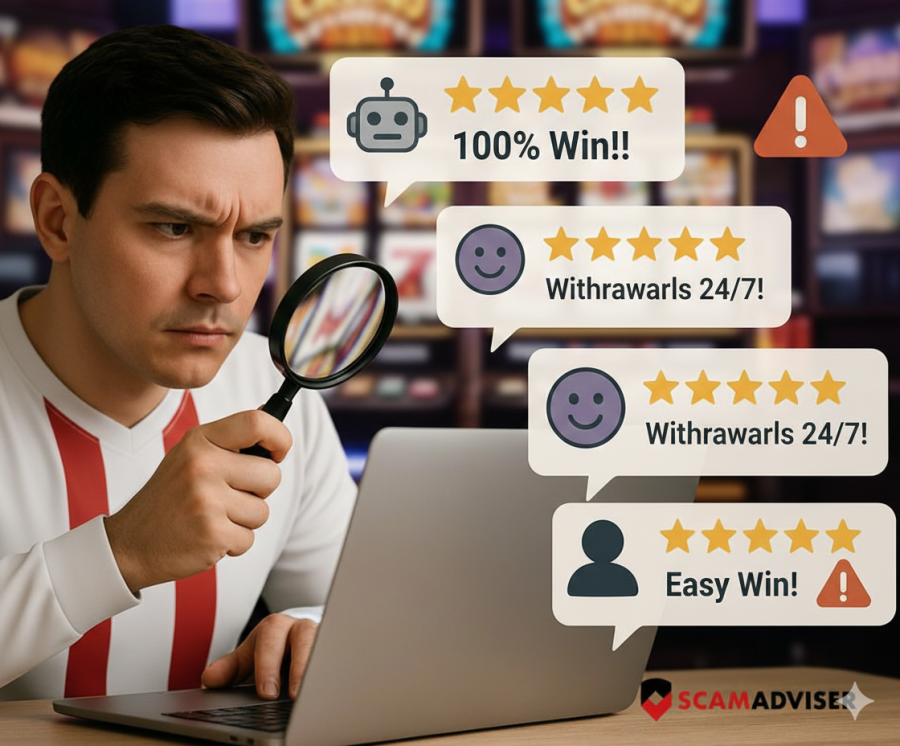
This raises a bigger question: How do you tell if someone is real or a scammer?
Look for inconsistency, evasiveness, pressure tactics, and refusal to provide verified documentation.
How to Recover Your Money After an Online Casino Scam
Now comes the question most people ask after realizing they’ve been scammed:
Is it possible to get money back from an online casino?
Here’s the honest, expert-level answer: recovery is possible—but only under specific conditions.
If you deposited using a credit or debit card, your bank may allow a chargeback within 120 days. But you need to prepare yourself for the reality that many gambling-related chargebacks fail. The reason is something most people never hear about until it’s too late: MCC 7995. This merchant code tells banks the transaction was for gambling, and many banks automatically decline disputes under this category—especially if the casino argues you “agreed” to their terms.
But what if you used crypto?
This is where things get difficult. There is no chargeback on crypto. Once you send Bitcoin, USDT, or any other coin, chances of reversing the transaction are rare. No bank, exchange, or authority can reverse it. If a casino pressures you to pay in crypto, that alone is a massive red flag.
So what can you actually do?
Start by securing your account—enable Two-Factor Authentication (2FA) anywhere you can. Then report the site to agencies like the FTC (for the United States) or ActionFraud (in the UK). This helps create a paper trail, and while it won’t magically restore your funds, it increases the chance of the scam being shut down.
Finally, reflect on your digital habits. Do you use the same password everywhere? Do you verify sites before signing up? Do you check licenses or audits, or do you trust flashy banners? Scammers rely on people skipping the boring steps. Don’t let them.
FAQs
How do I verify an online casino quickly?
Check the license on the regulator’s official website, then search for real eCOGRA audit links.
Can an online casino accuse me of bonus abuse just to keep my money?
Yes—scam casinos do this frequently. Real ones rarely weaponize the term.
Why do scammers misspell URLs?
Because they mimic legitimate brands through low-effort phishing scams.
Are fixed game outcomes real?
Yes—on scam casinos. Rigged RNG systems are one of their main tools.
Is the $20 casino method real?
No. It’s just a myth disguised as strategy.
Can crypto losses be recovered?
Unfortunately, the chances of reversing Crypto transactions are rare, sometimes impossible.
Protect Yourself With ScamAdviser App
Before you click “Deposit,” check the site’s safety rating on the ScamAdviser App. It takes 10 seconds and can save you your money—and your sanity.

Report a Scam!

Have you fallen for a hoax, bought a fake product? Report the site and warn others!
Scam Categories
Help & Info
Top Safety Picks
Your Go-To Tools for Online Safety
- ScamAdviser App - iOS : Your personal scam detector, on the go! Check website safety, report scams, and get instant alerts. Available on iOS
- ScamAdviser App - Android : Your personal scam detector, on the go! Check website safety, report scams, and get instant alerts. Available on Android.
- NordVPN : NordVPN keeps your connection private and secure whether you are at home, traveling, or streaming from another country. It protects your data, blocks unwanted ads and trackers, and helps you access your paid subscriptions anywhere. Try it Today!
Popular Stories
As the influence of the internet rises, so does the prevalence of online scams. There are fraudsters making all kinds of claims to trap victims online - from fake investment opportunities to online stores - and the internet allows them to operate from any part of the world with anonymity. The ability to spot online scams is an important skill to have as the virtual world is increasingly becoming a part of every facet of our lives. The below tips will help you identify the signs which can indicate that a website could be a scam. Common Sense: Too Good To Be True When looking for goods online, a great deal can be very enticing. A Gucci bag or a new iPhone for half the price? Who wouldn’t want to grab such a deal? Scammers know this too and try to take advantage of the fact. If an online deal looks too good to be true, think twice and double-check things. The easiest way to do this is to simply check out the same product at competing websites (that you trust). If the difference in prices is huge, it might be better to double-check the rest of the website. Check Out the Social Media Links Social media is a core part of ecommerce businesses these days and consumers often expect online shops to have a social media presence. Scammers know this and often insert logos of social media sites on their websites. Scratching beneath the surface often reveals this fu
Disclaimer: This article was originally published in 2018 and has been updated in October 2025 to reflect more current information, resources, and advice. Scams and recovery options continue to evolve, so always double-check with your bank, payment provider, or local consumer protection authority for the latest guidance. So the worst has come to pass - you realise you parted with your money too fast, and the site you used was a scam - what now? Well first of all, don’t despair!! If you think you have been scammed, the first port of call when having an issue is to simply ask for a refund. This is the first and easiest step to determine whether you are dealing with a genuine company or scammers. Sadly, getting your money back from a scammer is not as simple as just asking. If you are indeed dealing with scammers, the procedure (and chance) of getting your money back varies depending on the payment method you used. PayPal Debit card/Credit card Bank transfer Wire transfer Google Pay Bitcoin PayPal Good news: PayPal gives you strong protection. You can file a dispute within 180 days of your purchase. You can get a refund if: Your order never arrives, and the seller cannot provide proof of delivery. The scammer sends you something completely different (e.g., a controller instead of a PlayStation). The product condition was misrepresented (sold as new but arrives used). The item is missing undisclosed parts. The item is counterfeit. Start your claim directly through Pay